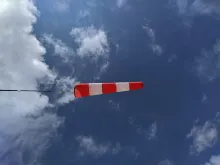
The meeting. On Thursday 5 March, at 6.30 pm at the Borarium in Opicina, Via Nazionale, 49, the Bora Museum will host the conference “What remains of infinity? - Exercises in amplitude with air and sky”.
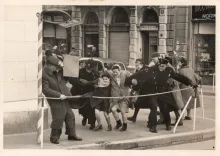
It’s natural to wonder: why are the Bora ropes gone? Maybe because the Bora isn’t as fierce as it once was? Or perhaps because the posts were replaced by newer ones with chains? Maybe these posts are now more useful as parking deterrents or for pedestrian safety? Perhaps because nowadays people drive more when it’s windy, while in the past they walked more? Or simply because the ropes were sometimes stolen? Most likely, the ropes disappeared for all these reasons combined.
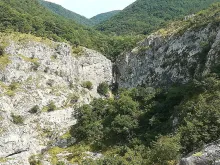
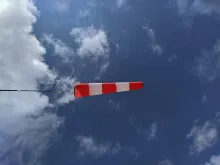
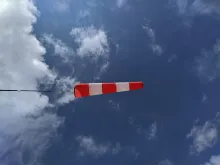
Just twenty minutes from the city center, in Val Rosandra, lies the windiest spot in the province of Trieste. Here, standing upright can be almost impossible in the strongest gusts. A stone engraving, a weather-beaten “flag tree,” and an anemometer mark the place – proof you’ve reached the record-breaking Bora Saddle.
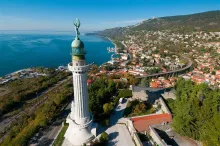
The Winged Victory statue atop the lighthouse was designed with holes in its wings and a steel frame, so it bends with the Bora’s fiercest gusts and resists their power.
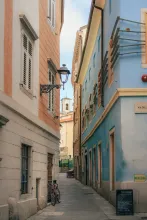
When the northeast Bora rages, these narrow lanes offer shelter from the gusts. Locals call them “Fòdre,” after the lining of a coat, because they shield you from the cold just the same.
At the corner with Windmill Street, the Bora – also known as the “Greek-Levante” wind – gives its best performance. Street signs swing, shutters rattle, and the wind plays louder than anywhere else.
In this lively district behind San Giusto you’ll find streets with telling names: “Windmill Street,” where the mill didn’t last long thanks to the Bora, “Wind Street,” and once even “Sheltered Alley.” If you’re after strong wind thrills, don’t miss San Giacomo!
In this elegant street it’s easy to be caught by sudden gusts. At the corner with Via Dante stands the statue of poet Umberto Saba, shown on his way to his bookshop with his coat collar lifted by the Bora – a poetic encounter.
This 18th-century villa was nicknamed “Borahall” by its owner George Moore, in honor of the violent gusts that battered it. It was also the birthplace of Scipio Slataper, author of My Karst, where the Bora plays a starring role.
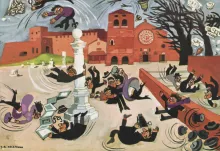
The square in front of the Cathedral is one of the most depicted Bora scenes in old postcards, and it’s easy to see why. From here, climb up to the castle for sweeping views over the city – dominated, like Trieste itself, by the Bora.